

The question sounds simple. In practice, though, the “best” test automation platform is the one that solves your main pain point: creating tests fast, maintaining them without breaking all the time, scaling execution, integrating with CI/CD, or finally getting real visibility into quality.
A lot of companies already automate something. The problem is that it often turns into a patchwork: one team runs Selenium, another runs Cypress, another runs Playwright, each with its own report. Automation exists, governance doesn’t. And when someone needs answers, they take too long to get.
This setup is expensive. The study “The Economic Impacts of Inadequate Infrastructure for Software Testing” (NIST, 2002) estimated the annual impact of testing-related issues in the US at US$ 59.5 billion, with potential savings of US$ 22.2 billion through improvements. In another classic point on the topic, the IBM Systems Sciences Institute popularized the idea that the cost of fixing defects rises sharply as a bug moves through the lifecycle, reaching much higher orders of magnitude once it hits production. The exact number varies by context, yet the direction is always the same: finding issues early is much cheaper.
So let’s get to the main question: what is the best test automation tool today? Keep reading this blog.
The 5 Best Test Automation Platforms on the Market
1) TestBooster.ai
TestBooster.ai is a Brazilian SaaS platform that automates tests with AI and acts as a single, centralized quality hub. Instead of being just another automation tool, it solves a broader problem: organizing and connecting everything the company does in QA, including legacy automations.
The flow is simple and straightforward: you create a project, describe what you want to test in natural language (in English), run it or schedule it, follow the execution, and receive detailed reports. These results feed unified dashboards that show quality by product, team, and user journey.

2) Playwright
Playwright is a very strong open-source framework for E2E testing. It’s multi-browser and has solid debugging tools. For teams that like “everything in code” and want fine-grained control, it tends to deliver a lot.
The main watch-out isn’t execution. It’s what comes after: governance and quality readouts. As the company grows, questions show up that don’t fit well in a pure framework, like “which business journey has been the most unstable this month?” or “which team is causing more regressions?”. To answer that, you usually need to build integrations, standardize reporting, and create a management layer.
Read more here
3) Cypress
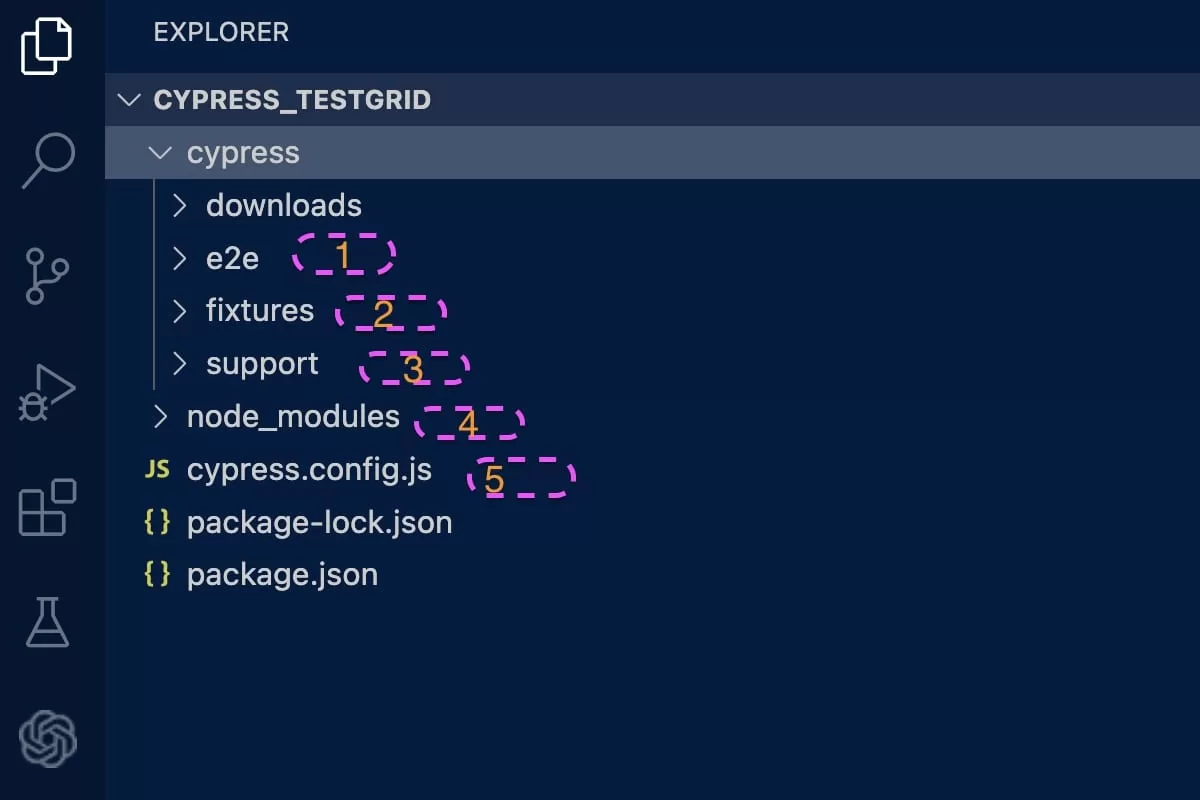
Cypress is a favorite for many people because the experience is friendly, and the ecosystem is large. In teams with a strong front-end dev presence, it’s adopted quickly and becomes a natural part of the flow.
It works very well in many UI scenarios. As the suite grows, though, the classic challenge appears: UI tests can become fragile if there’s no standard and discipline. And the same issue comes back again: unified visibility usually sits outside the tool.
Read more here
4) Selenium
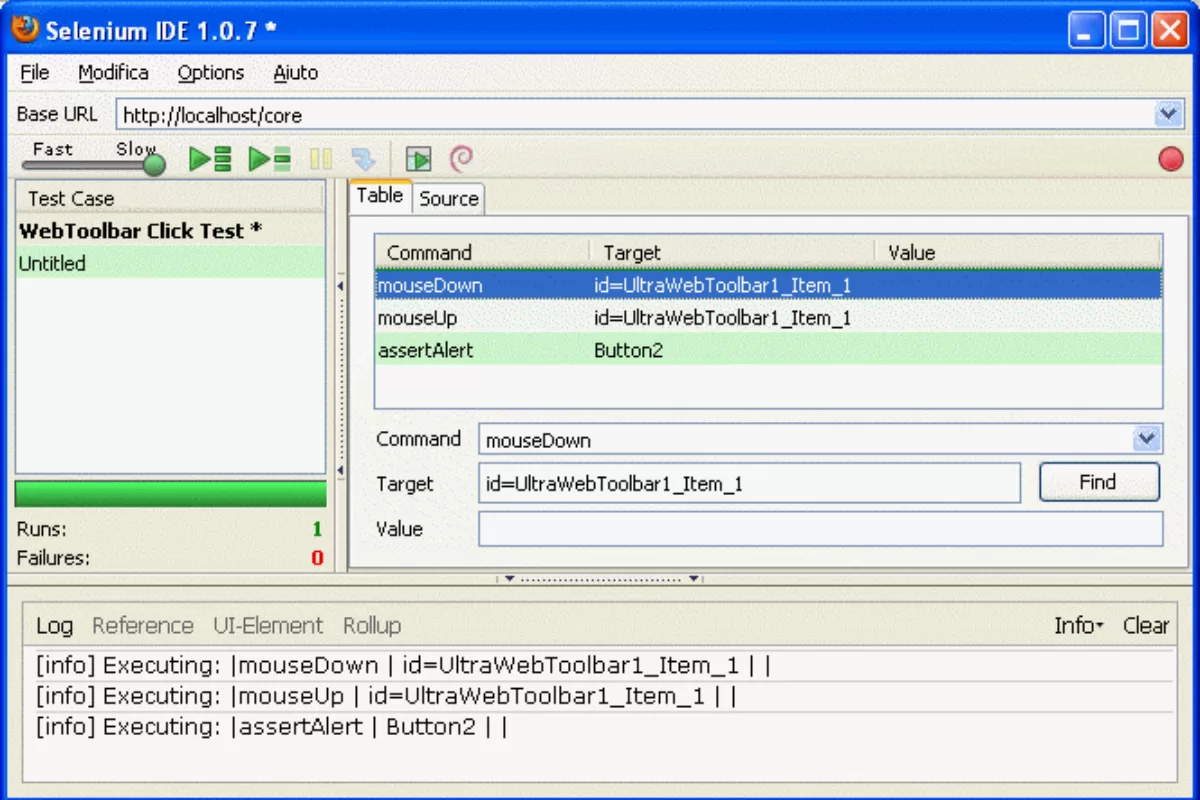
Selenium is the “classic” UI automation tool. A lot of companies have years of investment there. In that scenario, the question is rarely “should we switch?”. The real question is “how do I make this legacy work in my favor without duplicating efforts?”
Execution itself is feasible and mature. Maintenance tends to be heavier, especially in more dynamic interfaces. And product/team visibility usually depends on how you structure pipelines and reports.
Read more here
5) Katalon Studio
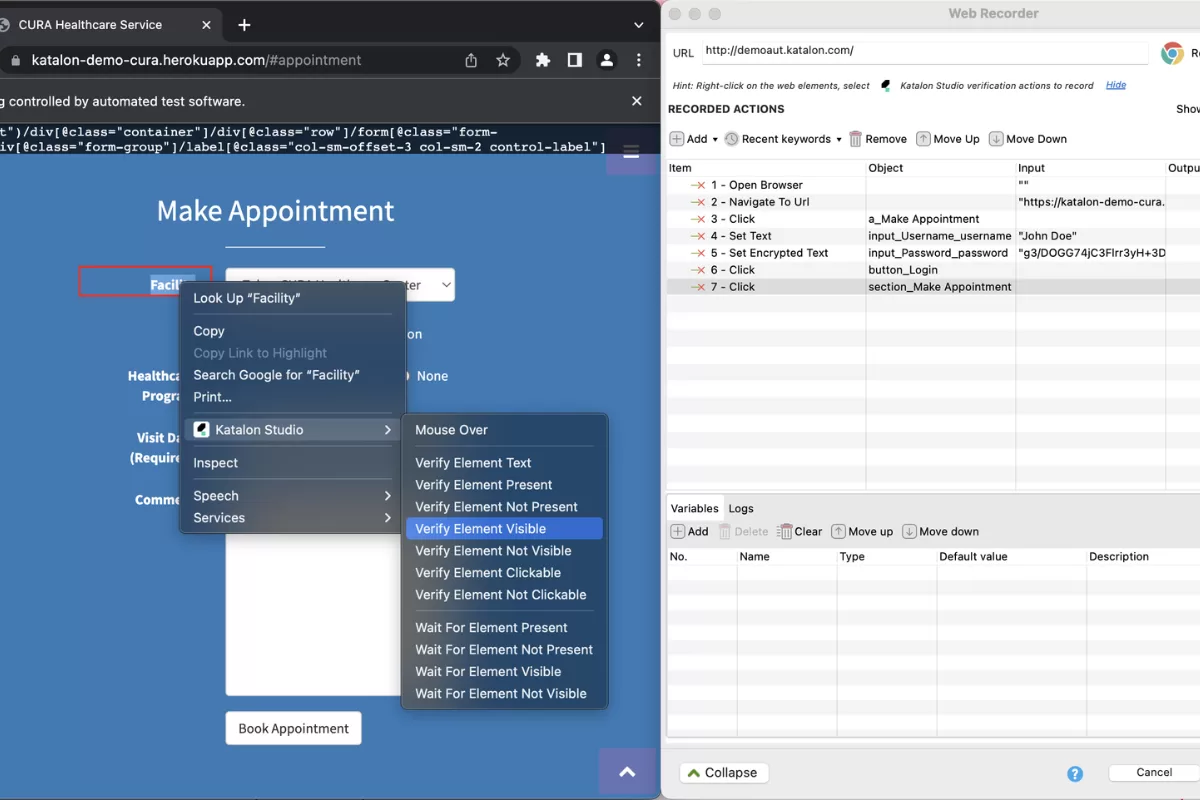
Katalon fits well when you want a more “ready-to-go” tool, with guided paths and less dependency on code from the start. It helps teams move from zero to something working faster.
The key caution is not creating a new silo. If the company already has more than one tool running, you may still lack global visibility.
Which One Is the Best? Three Scenarios, a Clearer Choice
Scenario 1: “My team is technical, I like everything in code, I want full control.”
Playwright and Cypress tend to be strong choices.
Scenario 2: “I need to automate fast and reduce dependency on specialists.”
Here, TestBooster.ai tends to gain traction because of natural language, guided flows, and objective-based tests. You can get tests running with less friction and spread test creation to more people on the team.
Scenario 3: “My problem isn’t running tests, it’s visibility and governance.”
This is the scenario where standalone tools often fail in practice. You need a place that connects initiatives and turns execution into decision-making. TestBooster.ai was designed exactly with this centralization logic.
There’s a management reason behind this. When we talk about delivery performance, reliable testing becomes a requirement, not a luxury. The State of DevOps (2019) describes high-performing organizations with metrics like very low lead time and lower change failure rates. Reaching that level with flaky tests and fragmented reports turns into double the work.
How to choose?
If you want the safest way to decide, run a short, objective pilot:
- Pick a critical flow (checkout, login, password reset).
- Run it for 2 to 4 weeks and evaluate four things: time to create, time to maintain, report clarity, and how easy it is to put into CI/CD.
- See if you can answer quickly: “what broke?”, “since when has it been broken?”, “which product and which team does this impact?”
If your reality today is “each team has its own report,” the biggest gains tend to come from centralization. And that’s exactly where TestBooster.ai aims to be more than an automation tool: it steps in as quality infrastructure.
Want to implement this technology in your team? Talk to our team of specialists by clicking the link.